Scottsdale Real Estate & Community News

Scottsdale real estate is always at the top of mind for The Kay-Grant Group as we assist a lot of individuals every month interested in finding or selling their next piece of Arizona real estate; whether that's looking for Old Town Scottsdale condos for sale, a downtown Phoenix loft for sale, or selling their house in northern Phoenix. The Kay-Grant Group are your premier Scottsdale Realtors.

This blog focuses on topics relevant to the Scottsdale and Phoenix metro real estate community as well as to those residing in The Valley that are interested in things to do around The Valley or the general going-ons in Phoenix and Scottsdale.

Need a Good Real Estate Agent?

If you're interested in purchasing a home and would like to work with premier Scottsdale Realtors, please Contact Us and we can get you setup on a custom search. If you have any interest in selling your home, or just want to know what it's worth, Contact Us and we'll perform a market valuation to let you know what we believe your house, condo, or townhouse could sell for.

Sept. 4, 2019

JUST SOLD: Pima Meadows Home in South Scottsdale

Absolutely GORGEOUS Home Finds Happy Buyer in South Scottsdale!

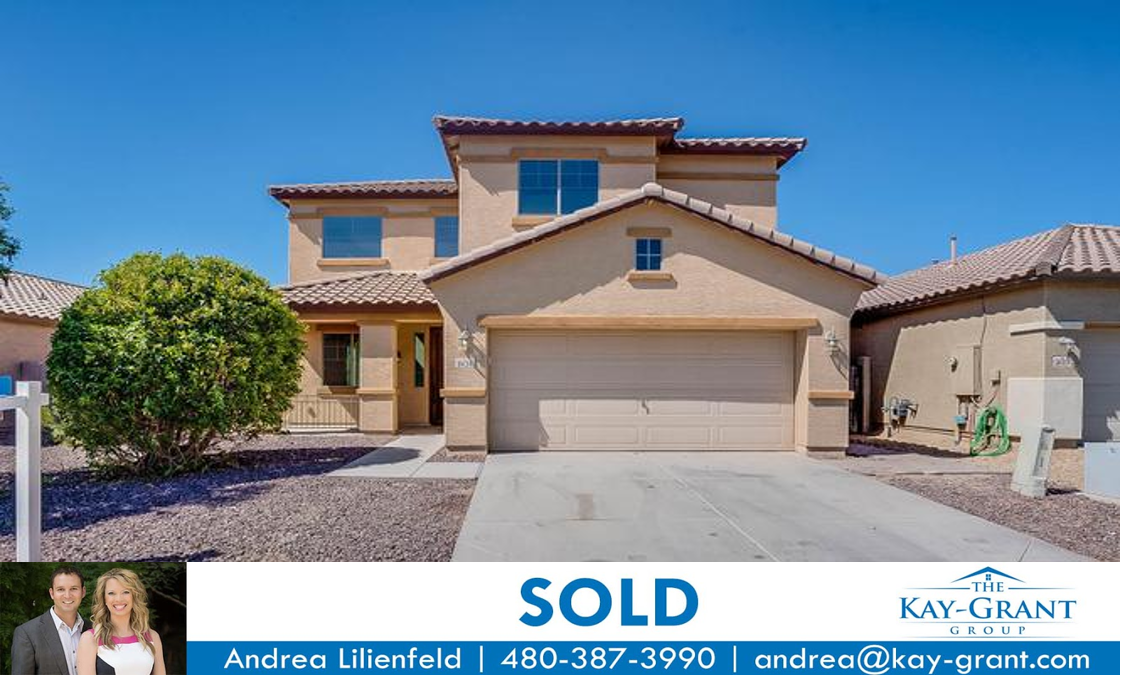
Sold Home in South Scottsdale

Located in the incredibly popular Pima Meadows subdivision in South Scottsdale, this 4-bedroom, 2-bathroom single family home officially SOLD today for over $433,000! The new owners of this stunning, fully remodeled home will enjoy easy access to the Loop 101, the Indian Bend Wash Greenbelt, and be less than 10 minutes away from all the fun and excitement of Old Town Scottsdale!

South Scottsdale has been emerging as one of the Valley's real estate hotspots, and this is just one example of the quality homes you will find in the area. If you are interested in finding a home similar to this one, we encourage you to check out our South Scottsdale Homes for Sale and South Scottsdale Condos for Sale pages.

We would also love the opportunity to sell your next home or condo in South Scottsdale! For more information about our amazing service, please fill out our Contact Form or call us at 480-387-3990.

Sept. 4, 2019

JUST SOLD: Beautiful North Phoenix Home

Amazing 3-bed, 2-bath Home in Highly-Desired Location SOLD in 1 Month!

Another day, another successful real estate sale for the Kay-Grant Group! This beautiful three bedroom home was on the market for only 32 days, and sold for $265,000! The buyer absolutely adored all the upgrades that were added including the woodgrain tile flooring, fully remodeled bathrooms and new stainless steel sink fixtures! The residents of this home will also enjoy easy access to Interstate 17, Highway 51 and the Loop 101. 

Providing a great real estate experience is our passion, and if you are ready to sell your Phoenix area home or condo, we have the knowledge and expertise to make magic happen! Please fill out our Contact Form or call us at 480-387-3990 and let us do the hard work for you!

Aug. 29, 2019

Avondale Townhome UNDER CONTRACT in just 3 Days!

It Only Took THREE DAYS for this 4-Bedroom Home in Avondale to Find a Great Offer!

Under Contract Avondale Townhomes

We are both surprised and amazed at the offers our client received for this incredible townhome in Avondale. Not only did the property receive multiple offers, the final accepted offer was ABOVE asking price! It honestly doesn't get any better than that. 

Demand for Avondale homes will continue to increase as more and more families move to the West Valley. If you are ready to put your Avondale home on the market, NOW is the time!

For those who are looking for an Avondale Home for Sale, we encourage you to fill out our Contact Form or call Andrea at 480-387-3990 today to learn more and schedule your showing!

Posted in
Aug. 29, 2019

Where to Place Lighting When Remodeling Your Home

Where to Place Lighting When Remodeling Your Home

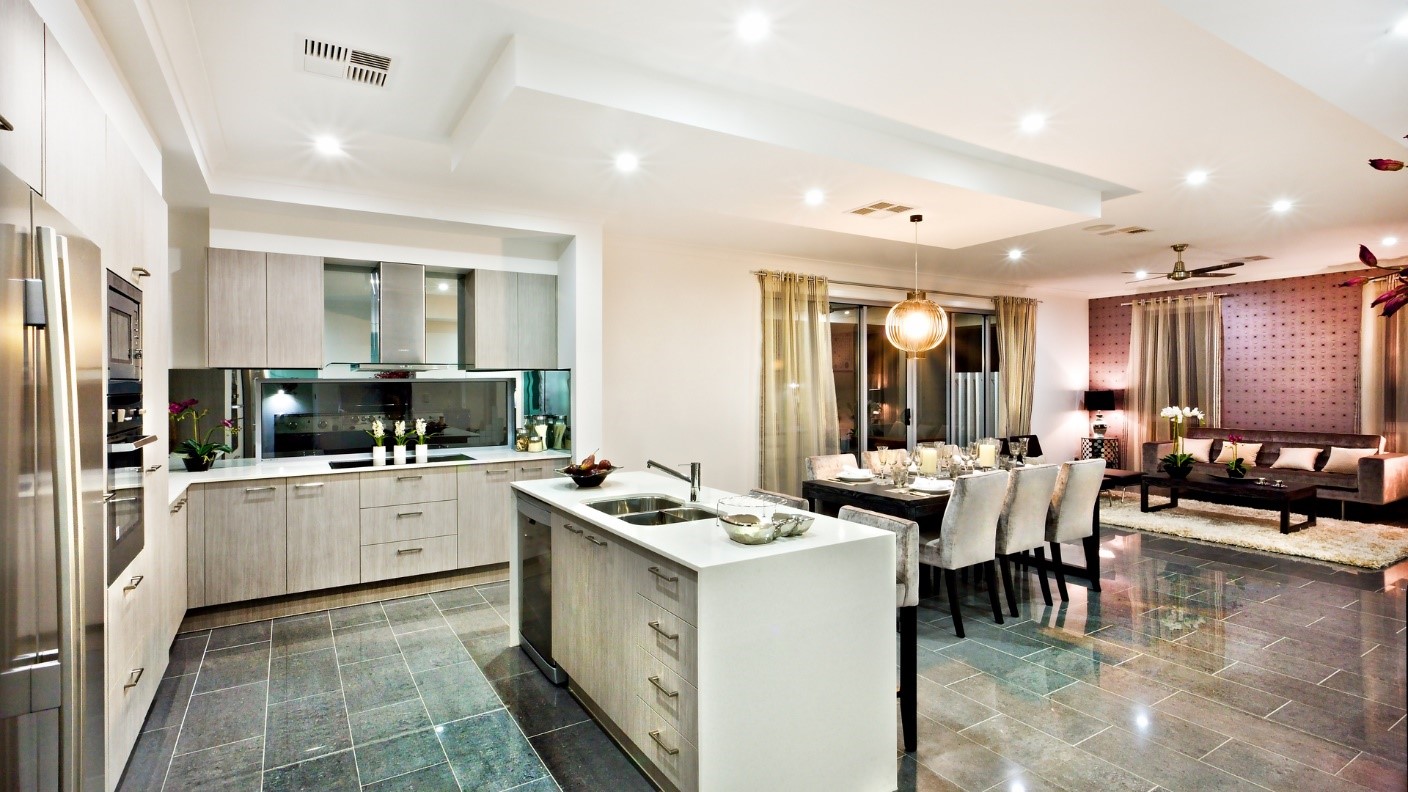
Vibes are all that anyone is talking about when it comes to modern home decor. Now, not to be cliché but lighting is everything when the conversation turns to vibes and figuring where and how to light a space is crucial when you’re remodeling. When light shopping always has a tape measure, measurements of the ceiling height, fixture colors, and hardware samples if you’re doing your kitchen/bathroom. This blog will tell you several tips on how to keep your home lit.

Height

When hanging lights in your home there are a few things that you should be paying attention to. One being is the fixture you’re shopping for an adjustable one or not. Most hanging lights are adjustable in the hanging height but some are not and it’s important to know exactly how low you want your light while shopping. As a rule of thumb, the bottom of a light should hang about 12 to 20 inches below a standard 8-foot ceiling. For each additional foot of ceiling height, add 3 inches.

Anchoring a Table

Many times when lights are hung especially in a dining room or kitchen, they’re being placed in consideration of the tables, islands, counters, etc. This is a very classic way to make lighting look and feel natural and also useful as it’s obviously going to illuminate the surface. When placing a light over a surface like that 28-32 inches is the most appropriate height but it totally depends on the size of the light that you’re hanging. Smaller lights can be hung lower and larger ones can be higher depending on the look you’re going for. Use this recommendation as just that, a recommendation.

Cordage

There are so many ways now to deal with excess cords while hanging lights. Like we mentioned earlier with the height of the light, the cord presents a slight problem if you’re hanging a light in a place where it wasn’t previously as you may need to open a wall and reroute your electric system. This can be avoided by playing with the cords. Either draping them or hanging the light from an exposed bar/pole/pipe it depends on the look you’re going for but just know that an exposed cord shouldn’t be a deterrent if you’re jonesing for a new fixture, think outside of the box!

Looking Up

We’ve mostly been talking about down lighting with pendant lights and chandeliers but up lighting is a great way to make use of wall space while usefully lighting a space. Don’t forget about these as accent to a room and adding a soft ambiance without the shadowing that can sometimes happen with harsh down lighting.

The Bulb

Knowing what you want your fixture to look like is one thing but how you want it to operate is another. The bulb makes a huge difference while the light is on, LED, halogen, and fluorescent bulbs all have varying tones of light and can make a big impact on the way the room is presented and can make paint look very different depending on the coloring. Consider this while installing lights and plan accordingly. Try a few different bulbs with lamps in the room you’re looking at to test each colorway!

Lighting the Way

Base lighting is becoming a huge trend now! Lighting on stairs and baseboard lighting through hallways is a great way to illuminate paths through your home. Stairs can be tricky at night so including them discreetly under the riser or on the side of a baseboard can help alleviate some otherwise hazardous areas of your home. This goes for under cabinets and near baseboards too. Discreet kitchen and bathroom lighting by lighting the underside of the upper and lower cabinets is a fun and unexpected way to light your space!

Have Fun with It

Add an unexpected color and shapes with your lighting! Including wall art as lighting is a fun way to dress up a space. As well as choosing a fun shade either for sconces or lamps to really bring a room together or to mix it up and add a fun pop of color or a cool texture. Don’t be afraid to mix it up or to step out and be bold, it’s just a lighting fixture!

Draw It Up

Making a lighting plan can really help you visualize it and when you’re explaining to professionals either buying the fixtures or when they’re installing the actual lighting can make sure you get exactly what you want. Take the time to really detail what you want the finished product being especially if you’re starting from scratch and putting electrical behind walls. You don’t want to be stuck with non-functioning light systems especially after putting in so much work! Plan accordingly!

Terms

Knowing some basic lighting terms may help when shopping. Ambient light is the light that is always present, or the general lighting in a room. Task lighting is what is used above prep space in a kitchen or above a desk, it lights for a specific job. Accent lighting is for displaying art or some sort of décor. Kelvin is a unit for how much color a light produces most bulbs will range between 2,500-6,500, 2,500 is the warmest looking color and 6,500 is the coolest. Wattage is how much electricity a bulb consumes and usually determines the lumens, the higher the wattage the brighter the bulb will be. Lumens is the bulbs actual brightness!

Basically lighting should never be an afterthought. This is going to be what illuminates every other aspect of your remodel. IT should be taken into consideration just as everything else does! Lighting is a huge component to how a home functions and what you can and can’t see when the sun goes down. Proper planning and making sure you’re doing your due diligence when lighting your place can ensure that you’re not only aesthetically pleasing with décor but that you’re adding value and making space useful and functional for the home.

Aug. 28, 2019

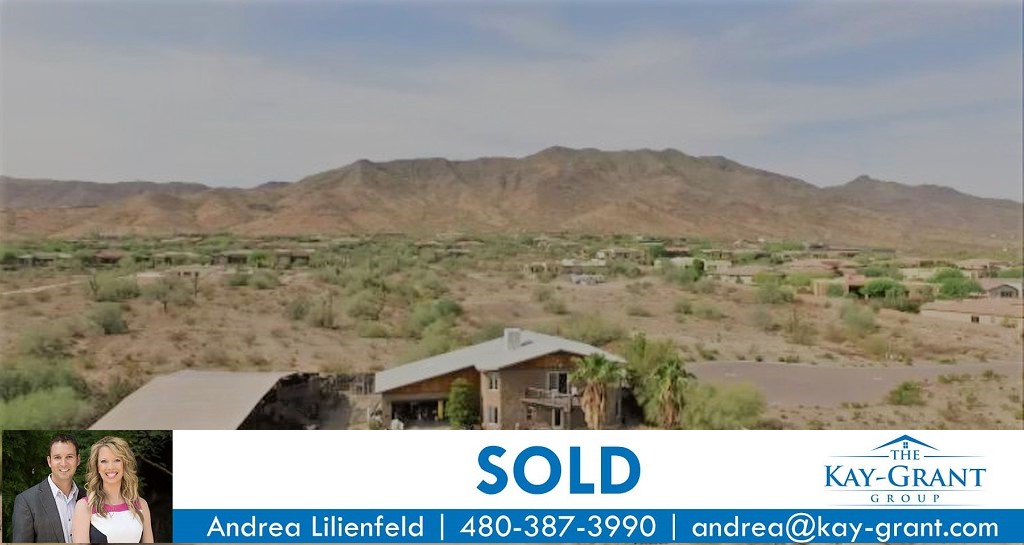
JUST SOLD! Three Acre Ranch Property near South Mountain!

A Beautiful 3-Bedroom, 2-Bathroom Home near the New 202 SOLD!

This incredible property, with its beautiful 2,680 square foot ranch home and 3-acre landscape, sold today for $350,000! The new owners of this home will enjoy breathtaking mountain views and a peaceful serenity you can only find within the South Mountain community.

Although this home appears to be in a remote location, everything from shopping and dining to public parks is no more than 15 minutes away! Also, once the extension of the Highway 202 is completed in 2020, access to the bustling West Valley and I-10 will be a breeze.

We love helping our clients find that perfect home in the Greater Phoenix area, and South Mountain continues to be one an incredibly popular area for residents. Please check out our South Mountain Homes for Sale page to learn more about the area, or Contact Us today to schedule a showing!

Aug. 26, 2019

JUST LISTED: Two-Story Townhome in Avondale!

Schedule a Showing TODAY for this 4-Bedroom, 3-bath Home near Shopping and I-10!

Just Listed Home in Avondale

Want to see 10557 W Monte Vista Road Avondale, AZ 85392 on Google Maps? Click Here!

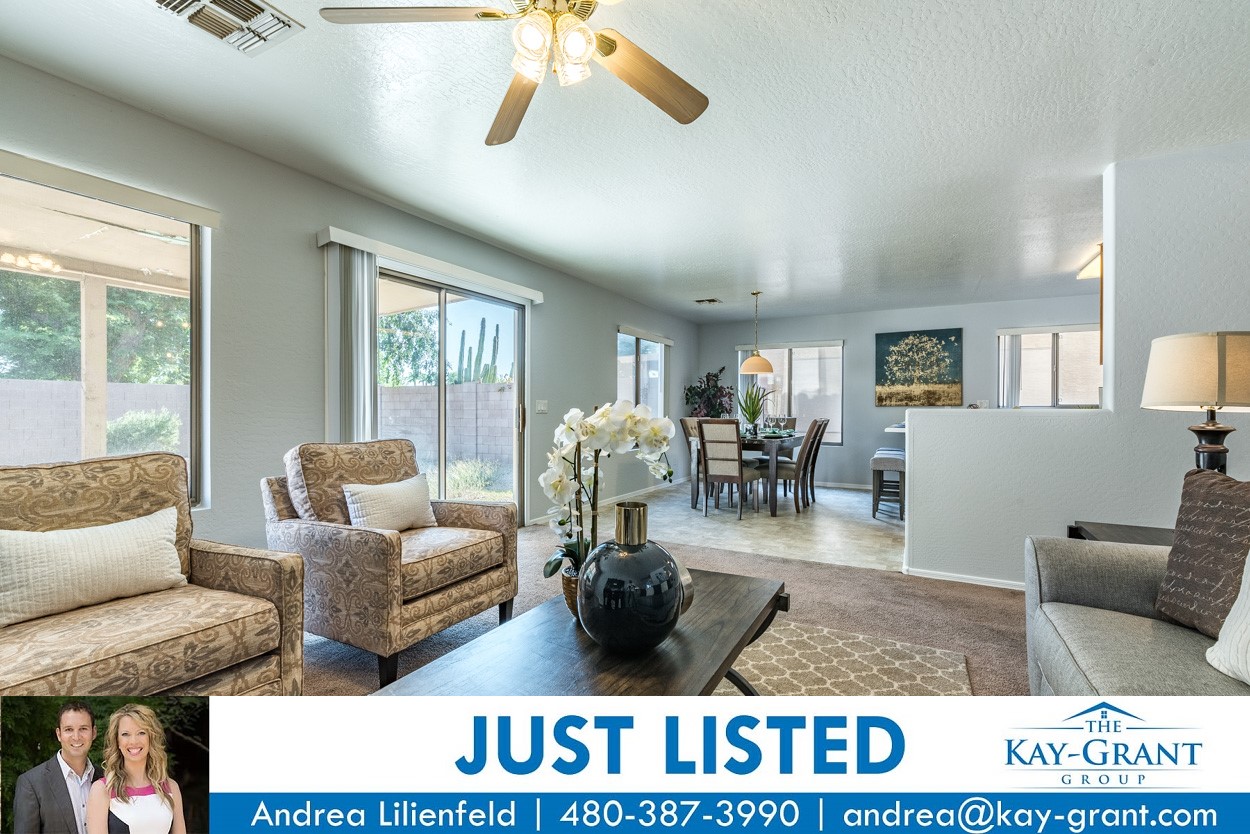
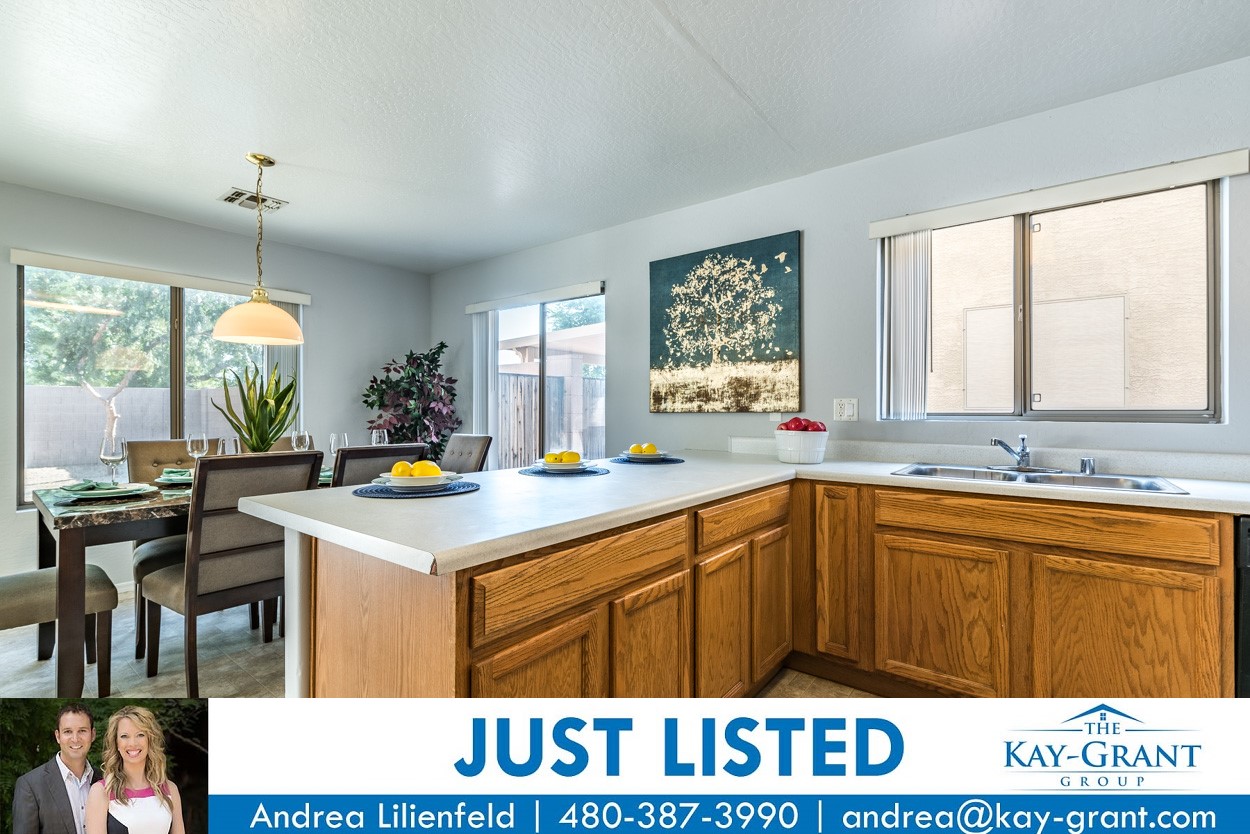
If you have a big family and need plenty of space for them, this house is perfect for you! Featuring 4-bedrooms, 3-bathrooms, and 2,173 square feet of living space, this two-story home is incredibly spacious! The lower level features a cozy living room, separate dining area, and a nice-sized all-electric kitchen. At the top of the stairs, the bonus room/loft is perfect for a a home office or game area for the kids. All four bedrooms are on the upper level, and the master suite features a spacious bathroom and an ample walk-in closet. The backyard has plenty of space and is full of potential as well!

Avondale Townhome Living Room

Gateway Pavilions, Avondale's premier shopping center, is only one mile from this beautiful townhome, and features everything from a movie theater and restaurants to a Costco Wholesale. Commuters can easily access both Interstate 10 and Loop 101, and the always-bustling Westgate Entertainment District is only 10 minutes away.

This home is priced at $240,000. With so much living space, and the close proximity to highways and shopping, this home will sell quickly!

Ready to Schedule A Showing for this Avondale Home for Sale?

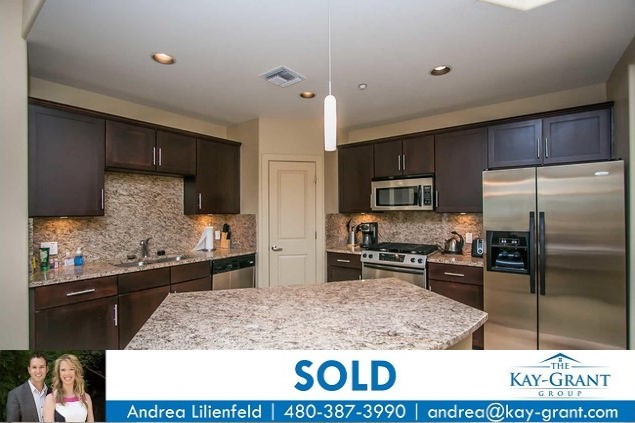
Avondale Home Kitchen

Avondale is one of our favorite West Valley suburbs to sell real estate, and we are extremely excited to help you find a great home in this amazing community. If you would like more information about the area, or if you're ready to schedule a showing, please call us at 480-387-3990 or fill our our Contact Form!

Aug. 23, 2019

JUST SOLD! Northshore Town Lake Condo

Ground Floor Condo SOLD in Less than a Week!

Just Sold Northshore Condo

Demand for condos in Northshore Town Lake is always high, and the demand for ground floor condos near the pool is even higher! Still, we were AMAZED at how quickly this 2-bedroom, 2-bathroom condo was under contract and off the market! The property sold for $320,000, which is $23,000 above what it sold for in January 2019. It only took 5 days for the home to sell, and the client couldn't be happier with our services!

We love helping our clients buy and sell real estate; not just in Tempe, or Scottsdale, but everywhere in the Valley! If you are ready to buy or sell a home, condo, or townhome in the Greater Phoenix area, please fill out our Contact Form or give us a call at 480-387-3990.

Aug. 23, 2019

Offerpad vs Realtor

What does Using an iBuyer Really Cost You?

“Selling my home was easy and painless!” said no one ever. This is what has led to the Phoenix area being a testing bed for the business model known as the iBuyer.

There is no person who has ever tried to sell a house traditionally that doesn’t know that it can be a real pain and can take a lot of time. That is going to be the main selling point of using iBuyers like Offerpad, Opendoor, and Zillow. They save you time and they save you headache, but what is this convenience really costing you?

Since the numbers that we can compare really don’t have a set average to draw on, we are going to look at an actual sale that went through an iBuyer. One of our agents was involved in this transaction and we can break down the numbers pretty accurately based on market conditions as of the publishing date of this article. Here we can give a solid comparison of what you can get from a good realtor versus an iBuyer for each major step of the process.

Valuing Your Home - iBuyer

If you choose to go to an iBuyer, the first step you will take is filling out their online form so they can do a quick market valuation from their proprietary software on your home. They will use this to gauge their first offer, which is often based on the lowest comparables in the area, and then take 5%-10% off this valuation and this will be their first cash offer. In this case the market value they used for this home was $280,000 and they offered $266,000, 5% below their initial valuation.

Valuing Your Home - Realtor

It is in the best interest of the realtor to get top (but accurate) dollar for your home, so it is wise to pick a realtor with experience and one that knows the area well. To value your home they will take accurate comparables including amenities, present upgrades, square footage, etc. In this case our agent was able to value the home initially at $285,000 and with update suggestions, that would have cost around $1,500 to the seller, that could have brought the value up to $295,000 before listing the home.

This is an initial difference of $29,000 between the iBuyer and the realtor.

The Real Offer from the iBuyer

What most sellers don’t know is that the initial offer from the iBuyer isn’t the real offer, that comes after they pay a visit to your home and do an inspection. It is their job to find absolutely everything wrong with the home to help drive down their offer, and this can result in another 2%-10% drop, depending on the state of the property. In the case of this home their offer dropped by another 2% from their initial valuation making their real cash offer $260,000.

This now makes the difference between the iBuyer and the realtor $35,000.

The realtor is already looking pretty good right? But let’s look at some of the downsides of using a realtor and why iBuyers exist in the first place.

Realtor Downsides

Say we go the route of updating your home to get the valuation up to $295,000, great! Except you had to pay $1,500 of your own money and delay listing your home for probably several weeks. You also had contractors tramping all over your house the entire time.

Then you must prepare the home for showings and maybe an open house, this leaves no room for laziness in keeping your home in presentation condition. Your home must be pristine the entire time if you want to expedite getting offers and maintain that top dollar valuation. There is typically no pets or young children allowed during showings and you are on the timeline of the prospective buyers which can feel rather intrusive and annoying.

There is the risk of hiring an inexperienced realtor and that can heavily affect how much your home is initially valued prior to an appraisal. You also run the risk of your home being on the market for a long time (this usually only happens if the realtor isn’t doing their job). Or the realtor can be a poor negotiator.

With that out of the way, let’s move onto the next steps in the process.

Getting An Appraisal

This step is negated by an iBuyer and they use their own proprietary software to generate a valuation on your home.

An appraisal is typically a fee that is incurred by the buyer, and if your realtor did their job right, the home’s price should vary little between the realtor’s initial valuation and the appraisers. The variance is typically less than 1%.

Negotiating the Sale

With an iBuyer, negotiation just doesn’t happen, it is a take it or leave it offer.

With an experienced realtor you should have several offers that will help get you to the price you want. This is also the reason your realtor encourages you to do everything you can to update the property to appeal to buyers, so you can demand top dollar on your home. If the negotiation goes a little south and the best offer you get is $290,000 on a $295,000 valuation, then you invested $1,500 to get a $5,000 bump in home value, and you still have a decent amount of room to negotiate if you have to. Then again you can get a bid war between buyers and get over asking price, this can be more on the luck side but the realtor’s skill does play a role here.

Once the dust settles and you and the prospective buyer come to an agreed price then you move on to the next step, closing costs.

iBuyer Fees

In the example that we have, the total fees from the iBuyer came in at about 7% of their cash offer. So, of their $260,000 cash offer you will pay $18,200 in closing fees. Leaving you with $241,800 in your pocket.

Realtor Fees

In this case let’s be conservative and say that the agreed selling price for this home was $290,000. The realtor fees that will be paid by you, the seller, will be right at 6%, this means you pay realtors a total of $17,400. Then we subtract the $1,500 on updates and that leaves you with $271,100 in your pocket.

If the difference in total money in your pocket is so pronounced, why would you ever want to sell your home to an iBuyer? But they exist for a reason: convenience.

Why You Might Want to use an iBuyer

The value proposition that iBuyers offer can be summed up in that one word, convenience, but it can be broken down into four main points:

  1. You don’t have to show your home.
  2. You can sell your home with no updates or repairs.
  3. You can close on the home quickly.
  4. The sale of the home is completely on your timeline.

When it is put that way, it doesn’t sound like much of an offering if you are interested in getting maximum return on your home, but there are those that this option would be the best one. For example, if you lived in a distressed property and the cost of getting the home market ready could be too risky. Throwing $100,000 at a home to try and get a net return of $30,000 can be a steep proposition and the returns really might not line up with the effort or risk.

You may have a home value that is rather low and the profit margins of selling traditionally vs an iBuyer are negligible.

You could be short on time and the headaches of selling the house traditionally are not worth it to you. Which was the case in the example we’ve used.

Conclusion

In the vast majority of cases, selling your home through a good realtor is a FAR better option if you are looking to make more money. In our example using a realtor, the total cost to you would be around 6.5% of the home’s value or $18,900. Using an iBuyer cost this person 16.7% of their home’s value, or $48,200, which is $29,300 more than our realtor example.

A 10% convenience fee is high in our opinion, so unless you are in a situation that would warrant using an iBuyer, we highly recommend that you use a realtor. Don’t let misinformed convenience cost you thousands, if not hundreds of thousands of dollars.
Aug. 20, 2019

The Ultimate Guide to Homeowners Associations (HOA)

Learn Everything You Need to Know About Homeowners Associations

Guide to Homeowners Associations

Whether you are a first-time homebuyer, a seasoned real estate investor, or somewhere in between, there are a plethora of factors to consider when buying a home, condo, or townhome. One of the most important, and often misunderstood, factors involved in buying real estate is if the property is located in a Homeowners Association (HOA) managed subdivision. 

Along with these considerations come a variety of different questions:

  • What exactly is a Homeowners Association? Are they good or bad?
  • What are the Pros and Cons of Living in an HOA?
  • What are the most important factors to consider when buying property within an HOA community?
  • What do I look for in a Homeowners Association?

As realtors, we feel it is vital to help our clients better understand the nuances of HOAs, which is why we created this in-depth article. By the time you finish reading our Ultimate Guide to Homeowners Associations, you will have a better idea of what to look for when buying your next home or condo.

What is a Homeowners Association/ HOA?

The simplest definition of a Homeowners Association is:

A nonprofit corporation established by a real estate developer to market, sell and manage homes. Once a certain number of homes have been sold, control of the HOA is transferred to a Board of Directors (who own homes in the subdivision) to operate and manage basic services for the community. 

New Homes in a Homeowners Association

Just like any corporation, a Homeowners Association operates under a determined set of rules, regulations, restrictions, and guidelines. If you decide to own a home in an HOA-managed community, you are legally obligated to follow the rules established by the Association.

Understanding the rules and regulations of an HOA is the most important aspect of buying a home in an HOA-managed subdivision. In the next section, we will provide more detail on the CC&R, which is the backbone of any Homeowners Association.

What are CC&R's?

CC&R stands for Covenants, Conditions, and Restrictions, and are essentially the rules of your neighborhood. Every HOA has one of these, and the specific rules, bylaws and guidelines can vary widely from one subdivision to another. 

Some of the most common rules and regulations covered in a CC&R include:

  • Parking: Certain HOAs prohibit parking on the street near your house, and possibly parking anywhere other than in your garage.
  • Pets: Breed and weight restrictions are important factors to consider if you have pets.
  • Exterior: The CC&R may have certain restrictions on what color your house can be painted, adding/removing trees, or even adding a fence.
  • Rentals: Whether you are a real estate investor or simply buying a home to rent until you move in permanently, some HOAs may have restrictions on homes being used as rentals.
  • Add-ons: Thinking about adding a backyard cabana, a patio, or an extra bedroom? The Homeowners Association may not allow you to.
  • Penalties: Depending on the violation, penalties can include fines, a suspension of community amenity use, and legal action.
  • Fees/Dues: Everything from the total amount of dues, what they cover, and the frequency of payment will be included in the CC&R.

Know the Rules on an HOA

This is not an exhaustive list, but it should provide an indication of how important it is to read the CC&R from top to bottom before making any decisions. Surprises and homeownership are rarely a good thing when combined, so knowing as much as possible about the Homeowners Association’s Covenants, Conditions and Restrictions is essential.

The Pros of a Homeowners Association

Homeowners Association Community Amenities

In many ways, the rules and regulations of a Homeowners’ Association are designed to protect the neighborhood, its residents, and (most importantly) home valuations. Here are some of the Pros of HOAs:

  1. Community Amenities: Several HOA communities provide pool/spas, playgrounds, fitness centers, clubhouses, game rooms, tennis courts, and more! These facilities add extra appeal to a neighborhood, and provide spaces for the whole family to get out and enjoy the outdoors with their neighbors.
  2. Uniform appearance: One of the worst things that can happen to a subdivision is having one (or several) bad neighbors. Unkempt yards, cars parked everywhere, loud parties: the list can go on. Not only can bad neighbors be a nuisance, they can also hurt your home’s value AND make it difficult to sell your home. By implementing (and enforcing) strict rules regarding appearance, noise levels, etc., HOAs provide a peaceful and visually appealing environment for current and future residents.
  3. Less work: Typically, Homeowners Associations handle the contracts for a variety of services many homeowners may not think about. Common area maintenance, water, trash collection, sewer maintenance, and front yard maintenance can be a hassle if you have to contract them on your own. When an HOA handles these services (with the dues you pay), it will save you time and money in the long run.

The Cons of a Homeowners Association

The downside of HOAs can vary depending on the individual homeowner, their overall plans with their home and their lifestyle preferences. However, there are certain aspects of a Homeowners Association that can affect the entire neighborhood in a negative way. Some common Cons of Homeowners Associations include:

  • Special Assessments: When a Homeowners Association collects dues, those funds are typically dispersed into two categories: current expenses and reserves. One key thing to point out regarding HOAs and the CR&Rs is that the amounts you pay are not fixed; certain circumstances can incur unforeseen expenditures that no one could anticipate. For example, a major storm damages the clubhouse roof and insurance won’t cover it. In these instances, an assessment is a one-time fee paid by the community in addition to their normal HOA dues.
  • Embezzlement/Fraud: It’s a sad fact of life: whenever money is involved, there is the possibility of fraud and/or embezzlement. Homeowners Associations are no different. A simple Google search for “HOA Fraud” will provide countless stories of board members scamming their HOAs out of 6- and 7-figure sums. These thefts can create a whole host of problems with vendors and basic service providers, and potentially deter prospective buyers from the neighborhood.
  • Stifled creativity: This has already been mentioned briefly, but Homeowners Associations are not very friendly to people who want a “unique” home. Depending on how strict an HOA is, something as simple as a mop and bucket may not be allowed in the front yard. Additions to the home may be heavily scrutinized or outright denied, and exterior paints may have to fit within a certain palette range. This may not be the most detrimental con, but for those who want the freedom to decorate and personalize their home, an HOA will not be their ally.

Now that you have a general understanding of everything an HOA does, are you still interested in finding a home or condo within one? If so, great! The next section will provide some simple guidelines to help you find an HOA that meets your needs.

What to Look for in a Homeowners Association

5 Tips for Buying Real Estate with a Homeowners Association

Finding a Homeowners Association that aligns with your goals of homeownership will require some research and planning, but the extra time you spend will be rewarding for both you and the HOA you decide to live in. 

Before we get into the specifics, there is one very important step EVERY prospective homebuyer needs to do before they start their search:

Know exactly (or as many details as possible) what you are looking for in a home, and the things you absolutely MUST have.

For example, if you have a dog or pet that may be a questionable breed or species, put it in writing. If you plan on renting your home, put it in writing. If you know you are going to have a lot of visitors and parking may be an issue, put it in writing.

Having these must-have items in writing will ensure there are no surprises later on down the road. Another benefit to listing your must-haves is it will make it easier for an experienced realtor to narrow your search based on his or her knowledge of the area.

Once your search is narrowed to the HOAs that meet your criteria, here are the steps you should take:

Google the name of the Subdivision and the HOA: Search engines are incredibly useful for finding out any past history of foul play. If you find any type of negative (verifiable) news about an HOA you are interested in, this can help you narrow your search even more.

Read (or have someone read) the CC&R thoroughly: This was mentioned briefly in the CC&R section, but somethings need to be repeated. If you don’t have the time or patience to read the CC&R, consult a real estate attorney to do it for you. The last thing any prospective homebuyer wants to encounter is to close on a home and move in only to find out your Rottweiler isn’t allowed in the community.

Check the financials and other records: Once an HOA has passed the first two tests, the next step is to check a Homeowners Association’s records for any discrepancies, such as:

  • Pending/current lawsuits.
  • Ample cash reserves for catastrophes and unforeseeable expenses.
  • Delinquent accounts (vendors and fellow homeowners).
  • Anything that may seem suspicious

Another good litmus test of any HOA or seller is how willingly (or not) they share these records with you, the prospective homebuyer. Although most of the records you need are publicly available, a property manager or board member who makes it easy to access information is typically a sign of good faith. However, if the property manager, the seller, and even the listing agent tries to hinder or dissuade you from checking their records, there is usually a (bad) reason.

If you follow these steps and everything checks out, you can move forward in the buying process!

Summary

Homeowners Associations are ideal for prospective home and condo buyers who prefer a uniformity, amenities, and tight-knit community atmosphere. Conversely, homeowners who want more freedom with how they decorate or renovate their home will feel more comfortable in a neighborhood without an HOA. The Kay-Grant Group is here to help all prospective buyers in Scottsdale, Phoenix, and the entire Valley find the perfect home or condo. HOA or no HOA, we have the knowledge and expertise you need for a smooth real estate transaction.

*Disclaimer: Home Owners Associations are very complicated matters and nothing in this article is intended to be used as legal advice. If you have questions about a particular scenario, it is recommended that you speak with an attorney. Under no condition should you rely on the above information to make any legal or investment decisions.

Aug. 19, 2019

JUST SOLD: Silva Mountain Home for Sale

Beautiful 4-Bedroom, 3-Bathroom Single Family Home in Silva Mountain SOLD

Our team prides itself on being able to help clients all over the Valley buy and sell homes. As realtors, few things feel better than closing day, and we recently helped one of our clients sell this incredible home in the South Mountain subdivision of Silva Mountain. Aside from gorgeous mountain views, this home is also near Interstate 10 and some of the best hiking trails in Phoenix!

Interested in learning more about this area? See all South Mountain Homes for Sale.

Some real estate agencies only focus on a specific region of the Greater Phoenix area, but we strive to help our clients with all of their real estate needs no matter where they live! If you are looking for an experienced to help you buy or sell real estate in Phoenix, Scottsdale, or any Valley suburb, fill out our contact form below or call Andrea at 480-387-3990.